Ask a group of outdoor enthusiasts what wild camping means and you're likely to get a few very different answers.
For some people, wild camping means heading deep into the wilderness with a backpack, a lightweight tent and only the absolute necessities. No campsite, no facilities, no neighbours — just you, your tent and the landscape around you.
And then there are the people who will tell you that isn't the only definition.
There's a debate that comes up again and again: can you really call it wild camping if you're sleeping in a campervan, motorhome or TentBox?
Some people would say absolutely not.
Others would argue that if you're camping away from an organised campsite, surrounded by nature and without the usual campsite facilities, then the spirit of wild camping is still there.
So where do we draw the line?
And, perhaps more importantly, who gets to decide what wild camping looks like?
So, what do YOU think wild camping is?
Before I tell you what I think, I'd actually like to turn the question around.
What is your vision of wild camping?
Is it hiking for miles into the mountains with everything on your back?
Is it pitching a small tent beside a loch?
Is it sleeping somewhere deep in a glen, surrounded by nothing but hills?
Is it finding a quiet woodland spot?
Is it waking up beside a beach with the sound of the sea?
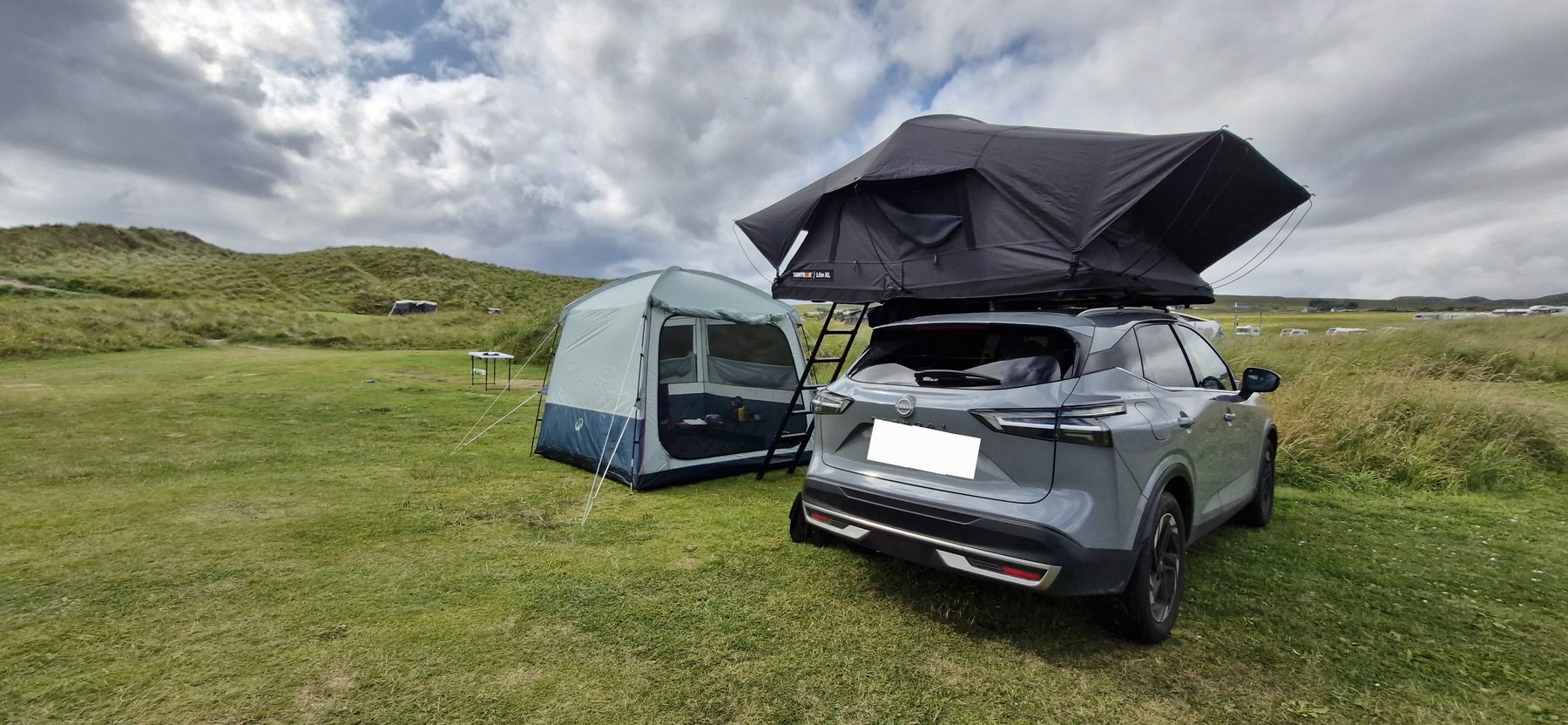
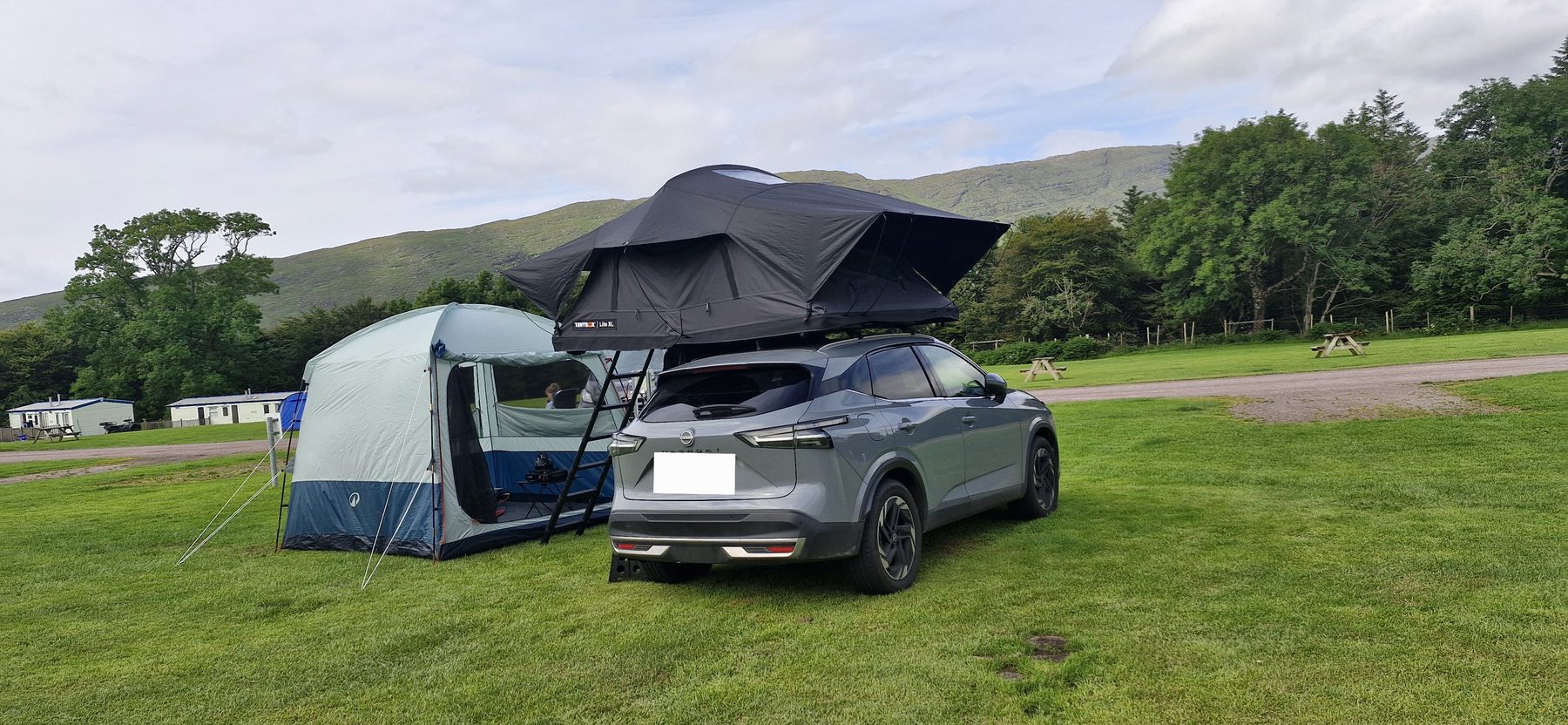
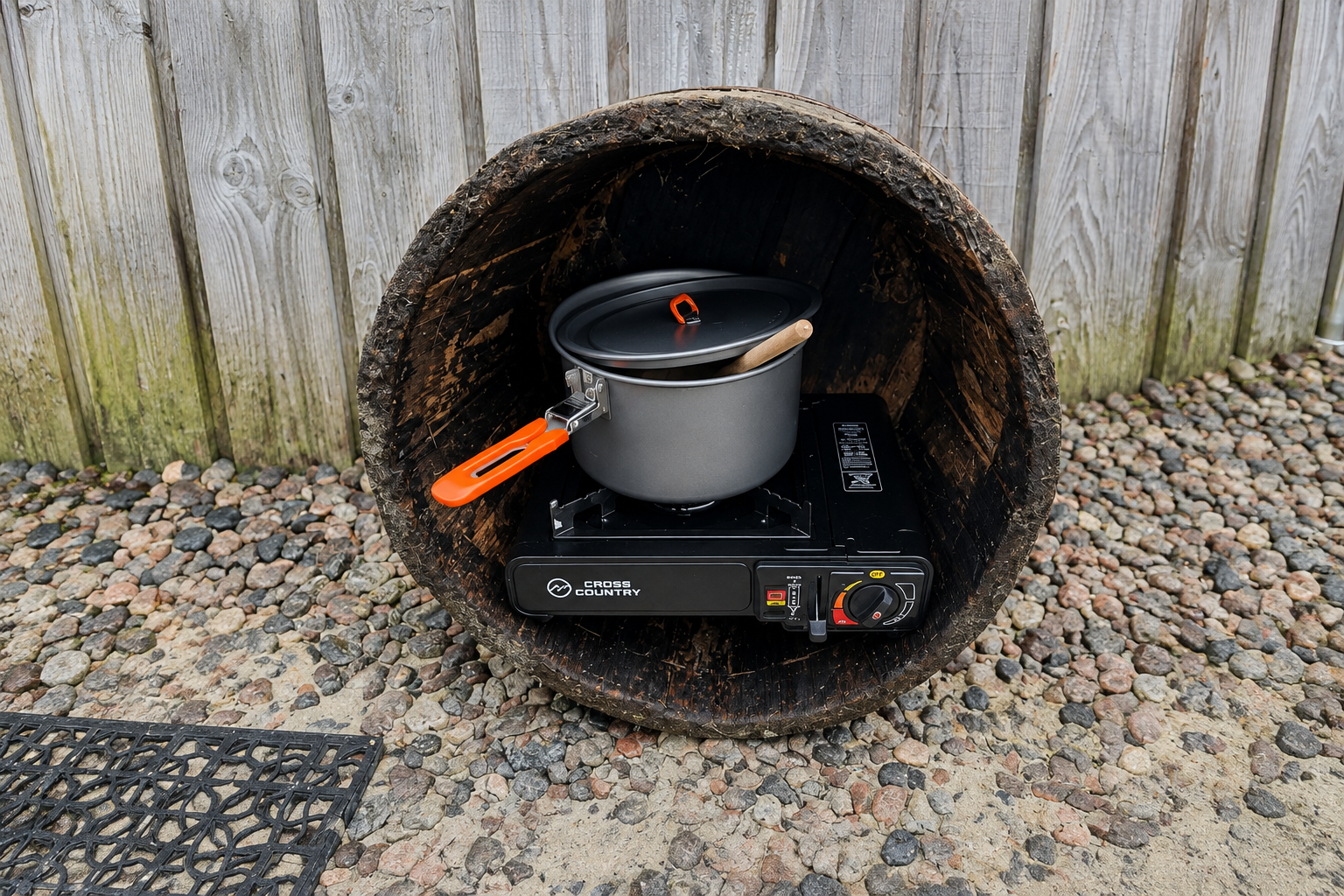
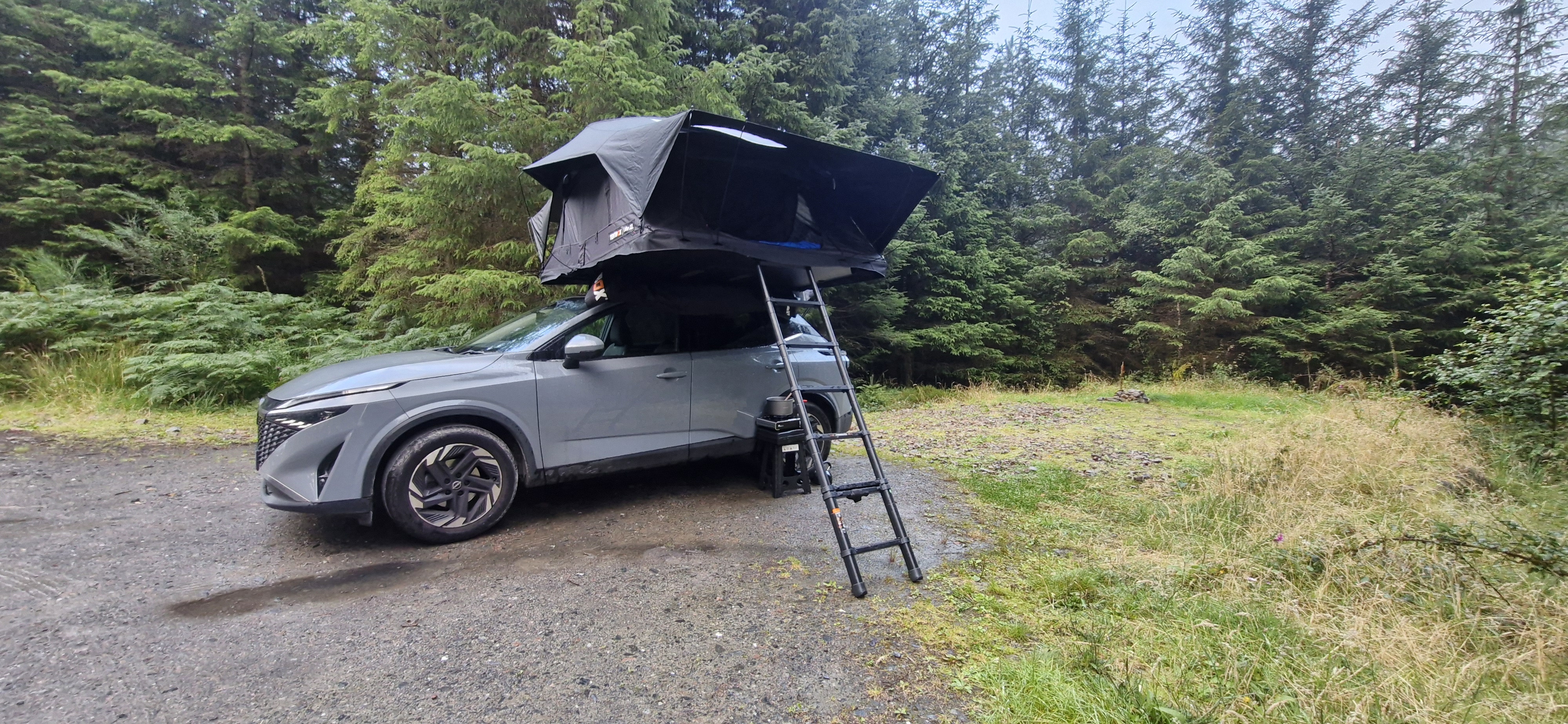
Or could it be pulling up somewhere quiet and remote in a TentBox, making dinner on a camping stove and watching the world go by?
For me, it's a bit of all of those things.
My version of wild camping
For me, wild camping isn't necessarily about how you arrived there or exactly what you're sleeping in.
It's about where you are and how it feels to be there.
It could be roadside camping in my TentBox.
It could be somewhere remote with barely another person around.
It could be beside a loch, tucked away in a glen, surrounded by woodland or sitting somewhere overlooking a beach.
The common denominator is that I'm away from the crowds, away from the noise and, for a little while at least, away from the usual routine.
It's me, my view, my camping stove and dinner.
Then there's the obligatory cup of tea.
Maybe even a glass of wine.
And obviously, in my imaginary version of this scene, there's a spectacular Scottish sunset.
Reality?
It's Scotland.
It's probably raining.
But honestly, that's part of the fun.
There's something incredibly peaceful about sitting in your TentBox while the rain taps against it, watching the landscape disappear into mist.
Does roadside camping count?
This is probably where my version of wild camping differs from the traditional idea.
If I'm parked somewhere quiet, legally allowed to be there, surrounded by a beautiful landscape and spending the night in my TentBox, does that make it less of a wild camping experience?
Some people would say yes.
I don't necessarily agree.
I'm not claiming that sleeping in a TentBox is exactly the same experience as carrying a tent into the mountains and hiking several miles before putting it up.
Of course it isn't.
They're different experiences.
But I don't think that means one has to be called real wild camping and the other doesn't.
For me, the attraction is the same: getting away from organised campsites and spending time somewhere quieter, surrounded by the outdoors.
Sometimes I actually find campsites too busy.
There might be people coming and going, children running around, generators humming, cars arriving late at night and all the usual campsite noise.
And sometimes I just don't want that.
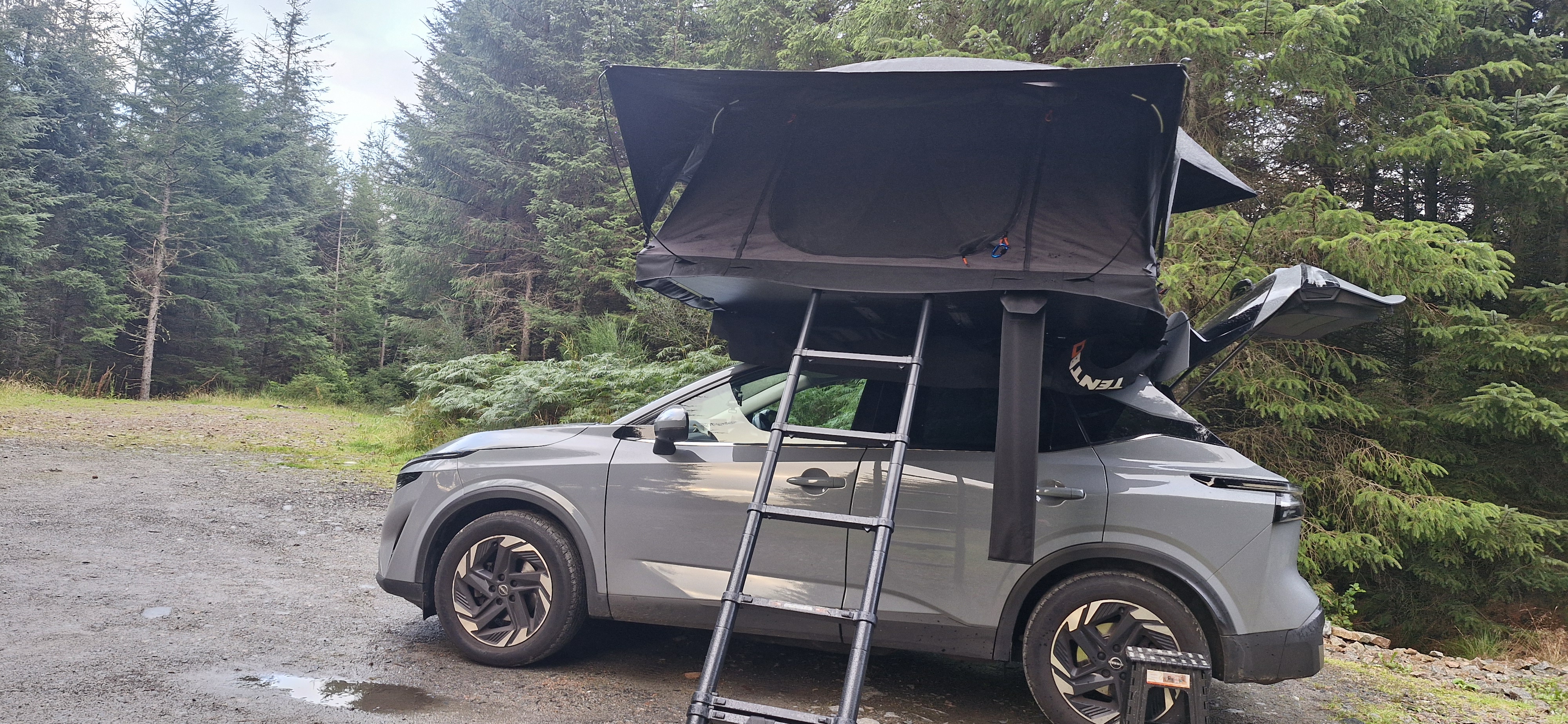
Sometimes I want to park somewhere peaceful, open the back of the TentBox and just look at the view.
I might go for a walk.
I might cook dinner.
I might make a cup of tea and read a book.
Or I might sit with my laptop and write one of the stories that eventually ends up here on Wildly Wandering.
Sometimes doing absolutely nothing is the whole point.
It's about the experience
I think this is why the definition of wild camping becomes difficult.
If we make the definition entirely about the equipment you're using, we potentially miss what people are actually looking for.
For one person, wild camping might mean carrying a 10kg backpack up a Munro.
For another, it might mean finding a quiet beach and pitching a tent.
For someone else, it could mean parking a campervan somewhere beautiful and waking up to a view they've never seen before.
And for me, sometimes it's my TentBox, a quiet road, a beautiful Scottish landscape and absolutely nobody around.
We're all experiencing the outdoors in slightly different ways.
And that's okay.
But there's an important part of this...
Saying that my version of wild camping can include a TentBox doesn't mean anything goes.
There is a big difference between finding somewhere peaceful to spend the night responsibly and simply parking wherever you feel like it.
Before heading off, it's important to understand where you're allowed to park, what restrictions apply and whether overnight parking is permitted.
Scotland has specific access rights, but those rights don't mean you can camp or park anywhere you want.
Vehicles are a particularly important distinction. Access rights for people on foot, bicycle or horseback don't simply give motor vehicles the same rights.
So if I'm taking the TentBox somewhere, I want to know that I'm actually allowed to be there.
Beautiful doesn't automatically mean legal.
And being able to access somewhere doesn't mean we should automatically do it either.
If an area is already overcrowded, restricted or clearly unsuitable for overnight stays, sometimes the responsible thing is simply to move on.
Leave No Trace
There's another part of wild camping that matters far more than what you're sleeping in:
How you leave the place behind.
I'm going to write a whole post about Leave No Trace because there's much more to it than simply taking your rubbish home.
For now, the basic principle is simple:
Leave the outdoors looking as though you were never there.
Take your rubbish with you.
Don't damage vegetation.
Respect wildlife.
Keep noise down.
Be considerate of other people.
And don't leave a beautiful place worse than you found it.
Whether you're carrying a tiny tent on your back or arriving in a TentBox, that responsibility doesn't change.
Why I love it
For me, wild camping is about freedom.
It's about being able to find somewhere peaceful, make a simple meal, pour a cup of tea and just stop for a while.
It's about waking up somewhere different.
It's about opening the TentBox in the morning and discovering that the view you couldn't properly see in the darkness is absolutely incredible.
It's about walking somewhere you've never explored.
It's about reading a book while listening to the rain.
It's about sitting beside a loch with absolutely nothing that needs doing.
And sometimes it's about staring out at a Scottish landscape thinking:
"I really am lucky to be here."
It doesn't have to be complicated.
It doesn't have to be expensive.
And I don't think there should be one single way to experience it.
The Wildly Wandering community
This is actually one of the reasons I started the Wildly Wandering Facebook group.
I wanted somewhere for people who enjoy this kind of adventure to come together without feeling like there is one strict definition of what you're "supposed" to be doing.
Whether you're an experienced wild camper, someone who has never spent a night outdoors before, a tent camper, a TentBox owner, a campervan owner or simply someone who loves finding quiet places and exploring Scotland, you're welcome.
It's a place to share your adventures, show people the places you've discovered, ask questions, get advice and chat to other like-minded people.
Because sometimes the best part of exploring is having other people to share the experience with.
So... what is wild camping?
Maybe there isn't one perfect answer.
Maybe wild camping is a tent in the middle of the Highlands.
Maybe it's a backpack, a stove and a mountain.
Maybe it's a quiet spot beside a loch.
Maybe it's a beach.
Maybe it's a forest.
Maybe it's a TentBox parked somewhere peaceful with a view, dinner cooking on the stove and a cup of tea in your hand.
For me, wild camping is about getting away from the crowds, connecting with the outdoors and finding a little bit of peace.
But that's just my definition.
What's yours?
What does wild camping look like to you?
I'd love to hear your version.
Share your wild camping setup, your favourite spot or your idea of the perfect night outdoors on TikTok or Facebook, or come and join the Wildly Wandering Facebook group and tell us there.
Because perhaps the real question isn't "What is wild camping?"
Perhaps it's: "What does wild camping mean to you?"
See you out there.