Winter is coming, and this year I'm planning to embrace it rather than hide from it.
I've decided that between October and March, I want to spend more than 30 nights camping in Scotland.
That's a lot of nights outside, a lot of cold mornings, probably a lot of rain and, hopefully, a fair bit of snow too.
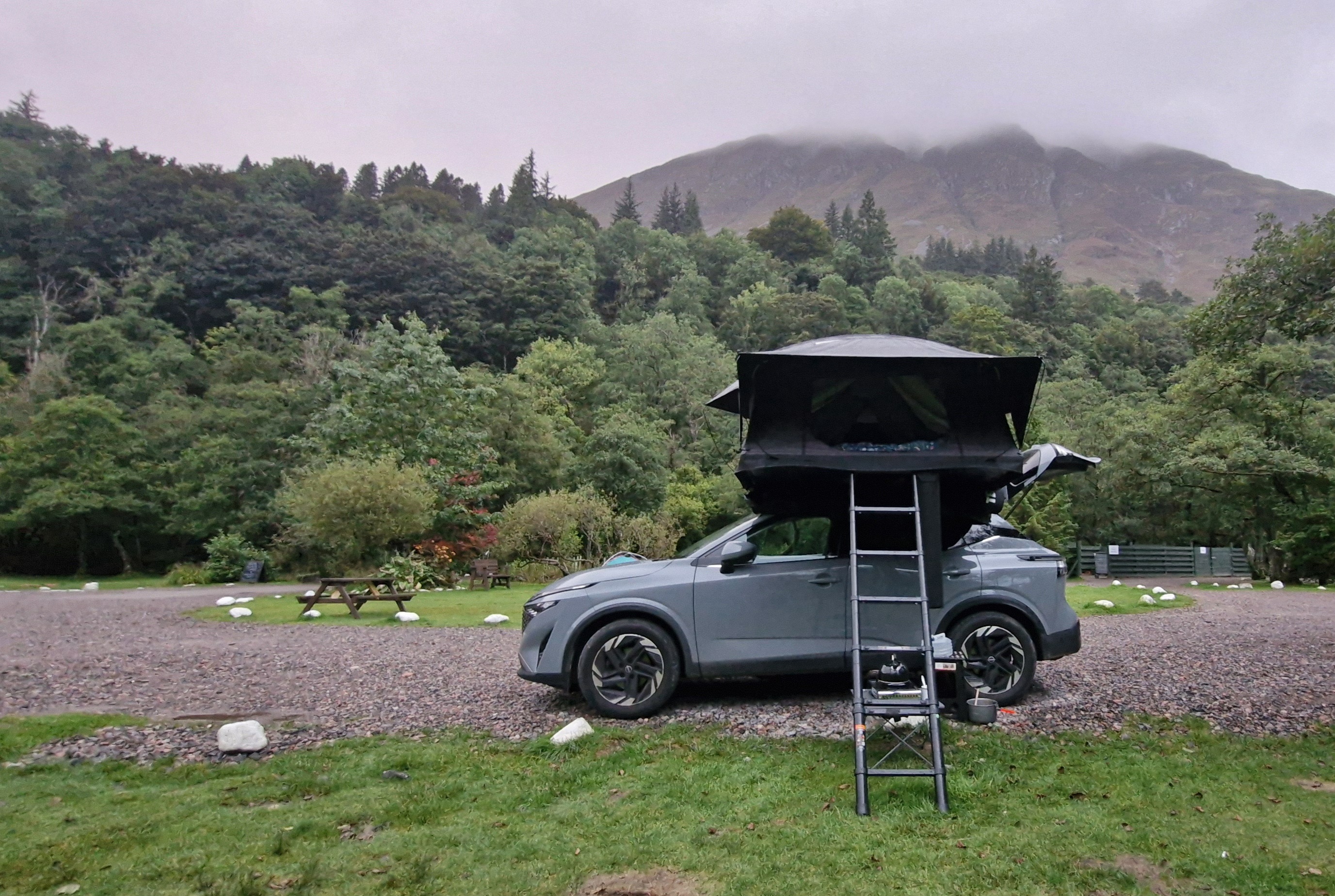
I've camped many times before in a regular tent, but my experience of camping later in the year is still very new. My first colder TentBox camping trip was only in September this year, when the temperature was around 8°C.
So this winter is going to be a bit of an experiment.
I'm going to find out what it's actually like to camp in a TentBox through a Scottish winter, what equipment genuinely makes a difference, which campsites are worth visiting and what I learn along the way.
Why winter camping?
I've always loved being outdoors, but there is something about Scotland in winter that really appeals to me.
The landscapes are quieter, the mountains can look completely different and there is something pretty special about waking up somewhere surrounded by frost, snow or mist.
Of course, there's also the small matter of Scottish weather.
So before I throw myself into more than 30 nights of winter camping, I need to make sure I'm properly prepared.
Preparing for Scottish winter weather
Scottish winter weather is one of the biggest things I'm going to have to prepare for.
Winter camping isn't just about low temperatures. I'm expecting cold mornings, heavy rain, strong winds, frost, ice, short daylight hours and, hopefully, some proper snow.
And then there's the Scottish wind.
A forecast might say 5°C, but standing outside beside a loch with rain coming sideways and a cold wind blowing can feel very different from a calm 5°C evening at home.
I'm therefore trying to prepare for cold, wet, windy and changeable conditions, rather than simply buying anything that happens to have the word "winter" on the packaging.
I'm also expecting condensation to become more of a consideration. Sleeping inside a relatively small enclosed space means that moisture from breathing overnight has to go somewhere, particularly when the outside temperature drops.
That's something I'm really interested in testing over the winter, and I'll be keeping an eye on how my TentBox performs in different conditions.
Wild camping or campsites in winter?
One of the things I'm going to experiment with this winter is the balance between wild camping and staying at campsites.
Scotland is an incredible place for getting outdoors, and responsible lightweight camping is possible in many areas where access rights apply. However, winter brings its own challenges.
Shorter daylight hours, freezing temperatures, difficult ground conditions, strong winds and rapidly changing weather all mean that I'm going to be more selective about where and when I camp.
Wild camping has a huge appeal to me. There is something special about waking up somewhere quiet, looking out of the TentBox and having a Scottish landscape almost entirely to yourself.
But campsites have some pretty obvious advantages in winter too.
A hot shower, proper toilets, somewhere to refill water and, on some sites, an electric hook-up can make a huge difference when you're spending night after night outside.
So I'm not choosing one or the other.
My plan is to do both.
Some nights will be about getting away somewhere quiet and experiencing Scotland properly, while other nights will be about finding a good campsite, plugging in and enjoying a slightly easier version of winter camping.
Campsites I've found for winter camping
One of the things I've been doing while planning my winter camping challenge is looking for Scottish campsites that I can actually use during the colder months.
I'm particularly interested in places that stay open through winter, because having access to toilets, showers and other facilities gives me another option when the Scottish weather is doing its worst.
These are some of the winter-friendly campsites I've found so far.
Loch Ness Shores Camping & Caravanning Club Site
Loch Ness Shores is right on the shores of Loch Ness and has gone straight onto my winter camping list.
It accepts tents and rooftop tents and has electric hook-up pitches, which makes it particularly interesting for my TentBox plans.
The location also makes it a great base for exploring the surrounding Highlands, so I can see this being one I'll keep coming back to when planning winter trips.
Red Squirrel Campsite
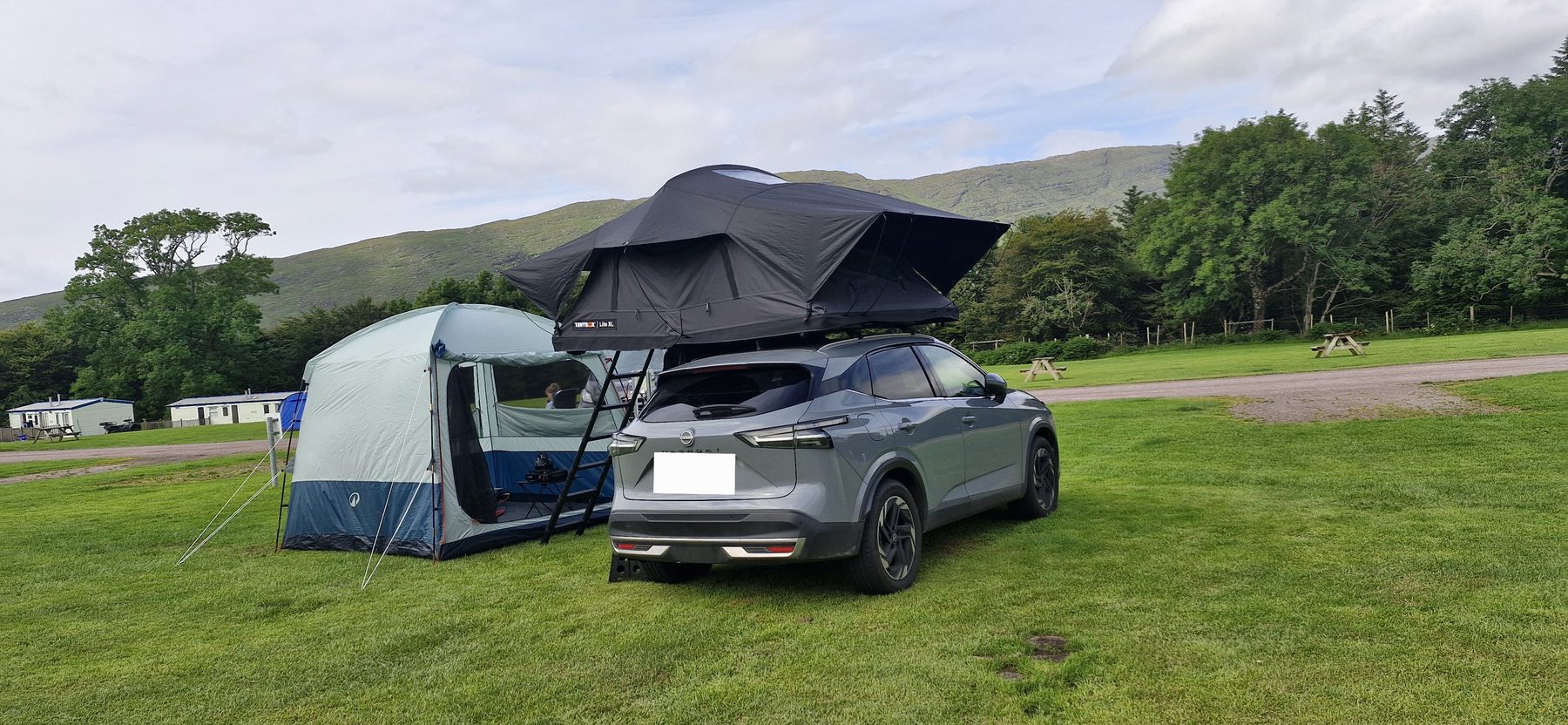
Red Squirrel Campsite is already a little bit special to me because I have been there a few times and this is where I had my first colder TentBox camping trip in September.
I spent the night there when the temperature was around 8°C, which gave me my first real taste of what winter camping in the TentBox may actually be like.
Now I want to go back and experience it in completely different conditions.
It will be interesting to see what the same campsite feels like when I'm there in the middle of winter rather than early autumn.
More winter campsites on my list
Glen Nevis Caravan & Camping Park
Glen Nevis is another one I've added to my winter camping list.
The campsite has introduced winter camping and is open through the colder months.
There are tent pitches as well as electric pitches, which is particularly useful for me because I'm planning to experiment with using electric hook-up with my TentBox.
It's surrounded by spectacular Highland scenery, so I'm already imagining what it will be like waking up there on a cold winter morning.
Glencoe Mountain Resort
Glencoe Mountain Resort is another one that I'm really interested in trying during winter.
The resort has an onsite camping area with electric hook-ups and is also a winter sports destination, so it could be a completely different camping experience once winter properly arrives.
Being able to wake up in the mountains with the possibility of snow around me is exactly the sort of Scottish winter camping experience I'm hoping to have this year.
It's also a great area for combining a camping trip with exploring the surrounding mountains and landscapes.
Glenmore, near Aviemore
The final campsite on my current winter list is Glenmore Campsite near Aviemore.
It's right beside Loch Morlich and surrounded by the Cairngorms and Glenmore Forest, which sounds like a pretty spectacular place to wake up on a winter morning.
The campsite is open all year and has pitches suitable for tents, as well as electric pitches and campsite facilities.
The Cairngorms are somewhere I really want to explore more during winter, so being able to combine camping with exploring the area makes this one particularly appealing.
I'm expecting the Cairngorms to give me some of the coldest conditions of my winter camping project, so this will be another good test of how well my TentBox setup actually works.
These are just the first few I've found.
I'm hoping the list will grow as I discover more Scottish campsites that stay open through the colder months.
My TentBox winter setup
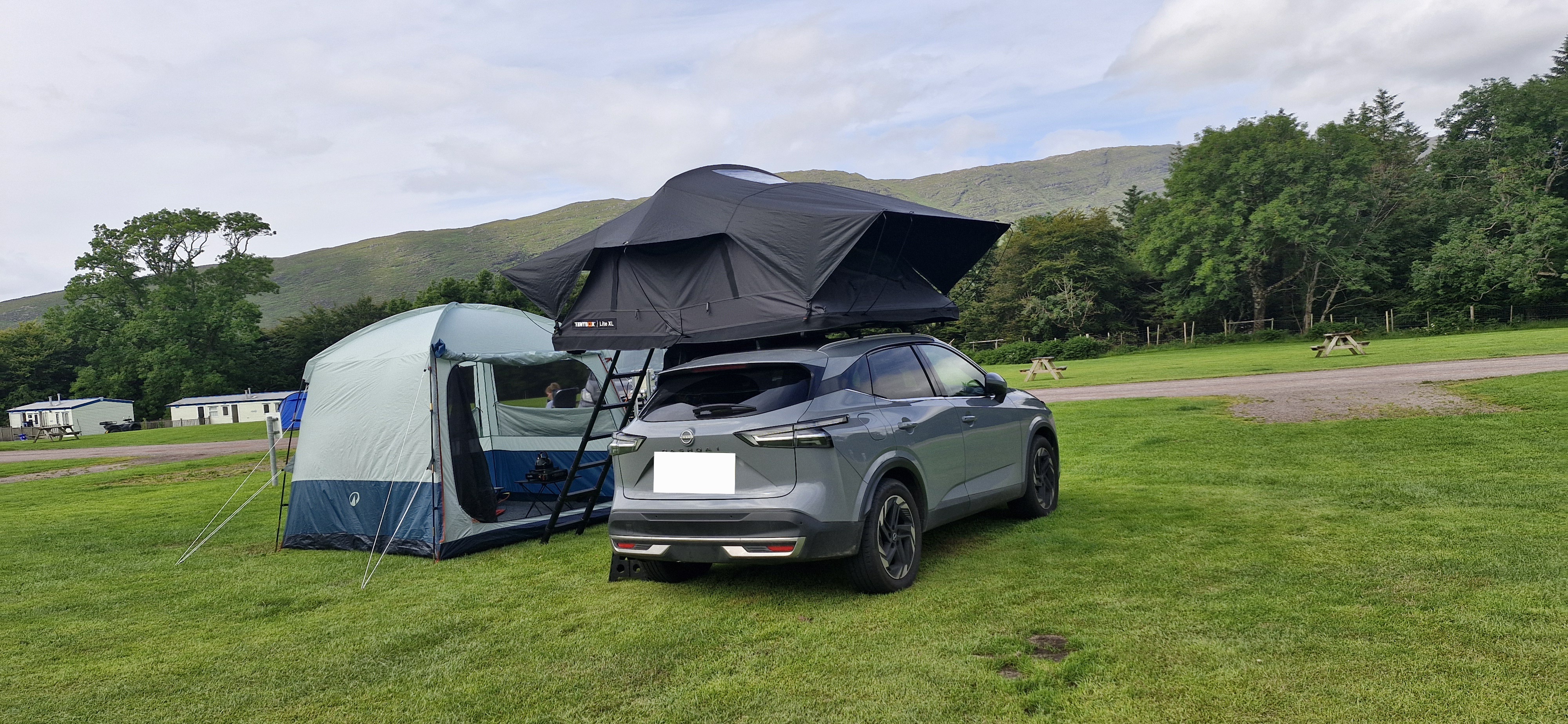
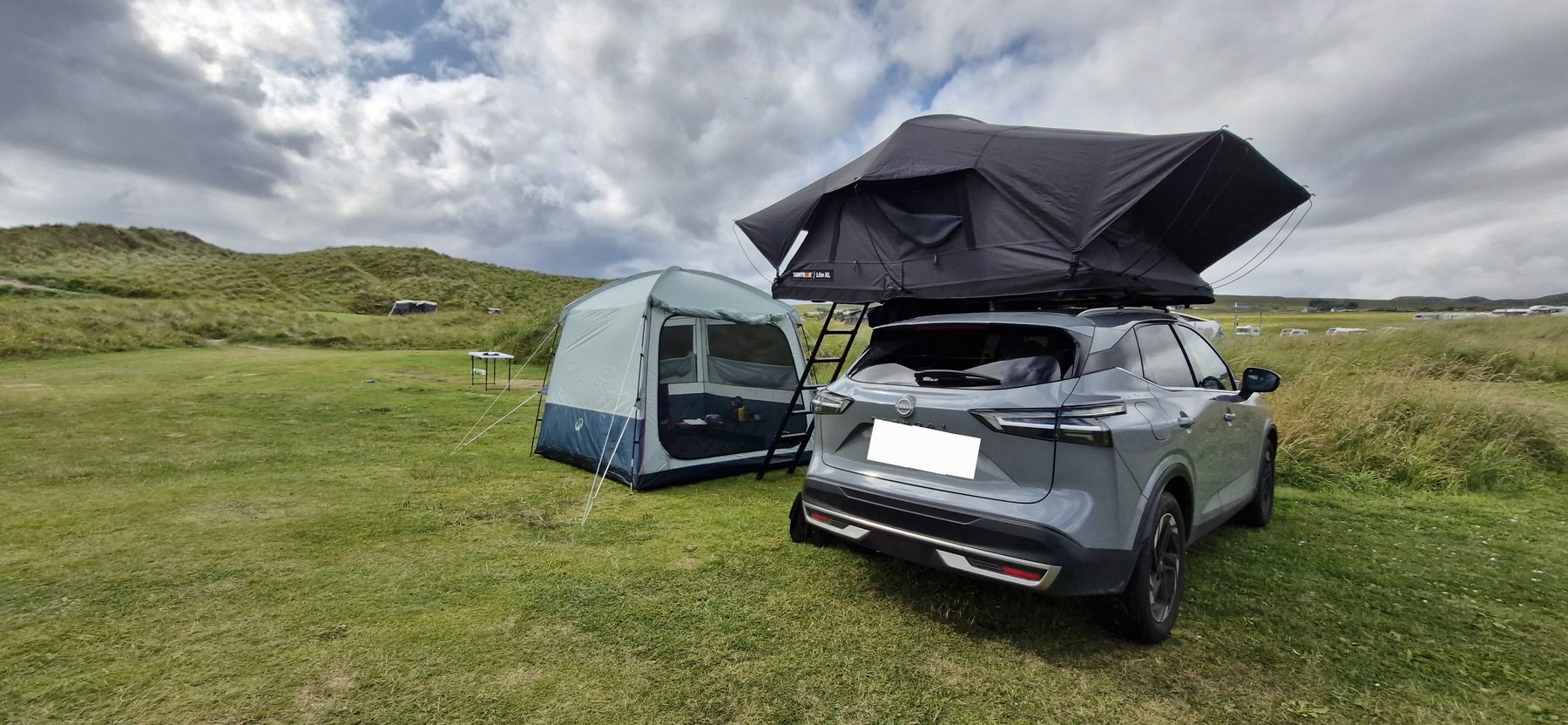
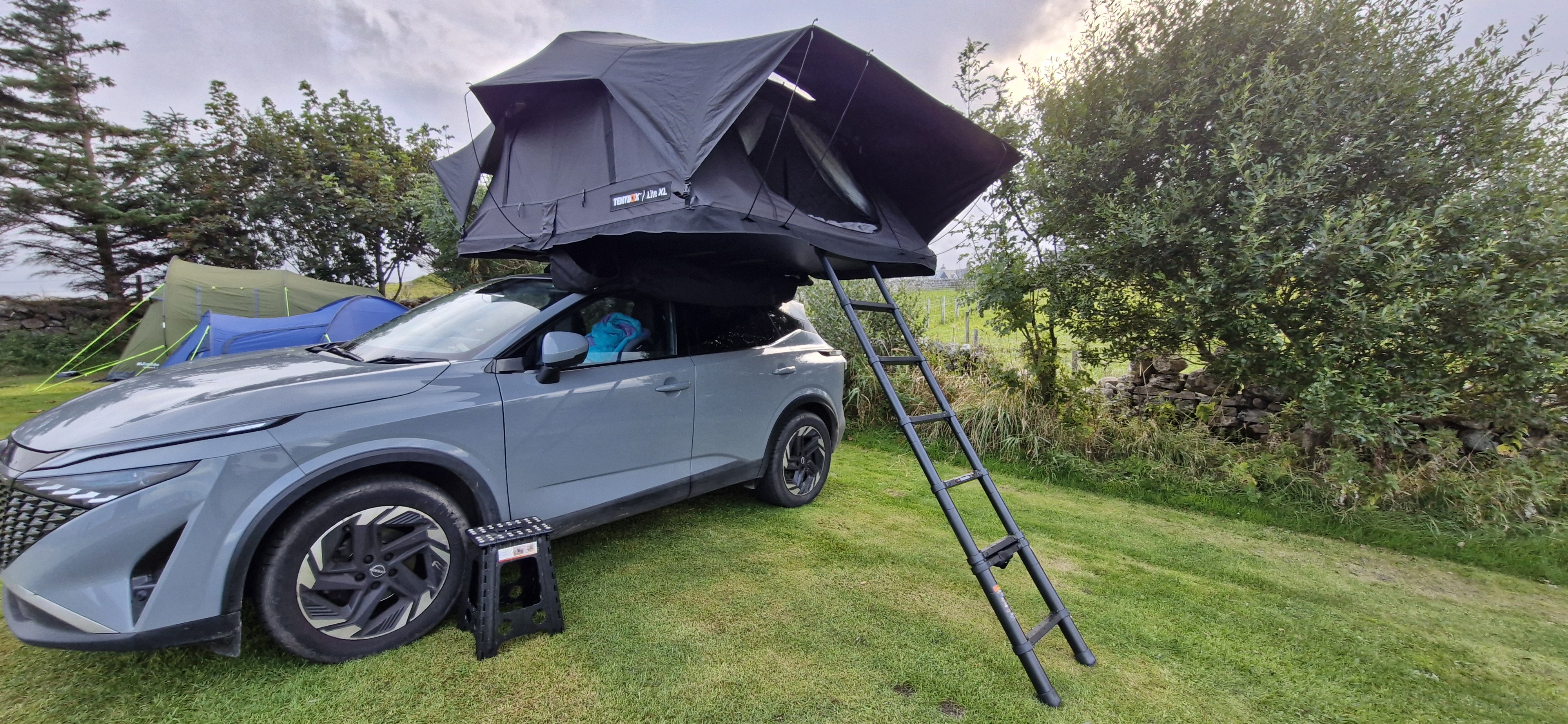
My home for these adventures is my TentBox XL in Flint.
I've camped many times over the years in a regular tent, but moving to a TentBox has completely changed how I think about camping.
There's something very appealing about arriving somewhere, opening the TentBox and already having your bed waiting for you. There's no spending ages putting up a traditional tent before I can settle in, and once I'm packed up I can simply close it and drive away.
But my experience with the TentBox is still very new as I only purchased it in June this year.
My September trip to Red Squirrel Campsite was my first proper experience of camping in colder weather, and the temperature was around 8°C.
Eight degrees was perfectly manageable, but I know that 8°C in September is very different from a cold, wet and windy night in Scotland in January.
So this winter is going to be a proper test of my setup.
I've already started buying things to make the TentBox warmer, more comfortable and better suited to spending night after night outside.
I'm particularly interested in three things this winter: keeping warm, managing condensation and staying comfortable when the weather is absolutely miserable.
Making the TentBox feel like home
If I'm going to spend more than 30 nights camping between October and March, I want my TentBox to feel comfortable.
I'm not trying to prove that I can survive a Scottish winter with the thinnest sleeping bag and three layers of clothing.
I want to be warm.
And I want my little sleeping space to feel cosy when I climb into it at the end of a long day outside.
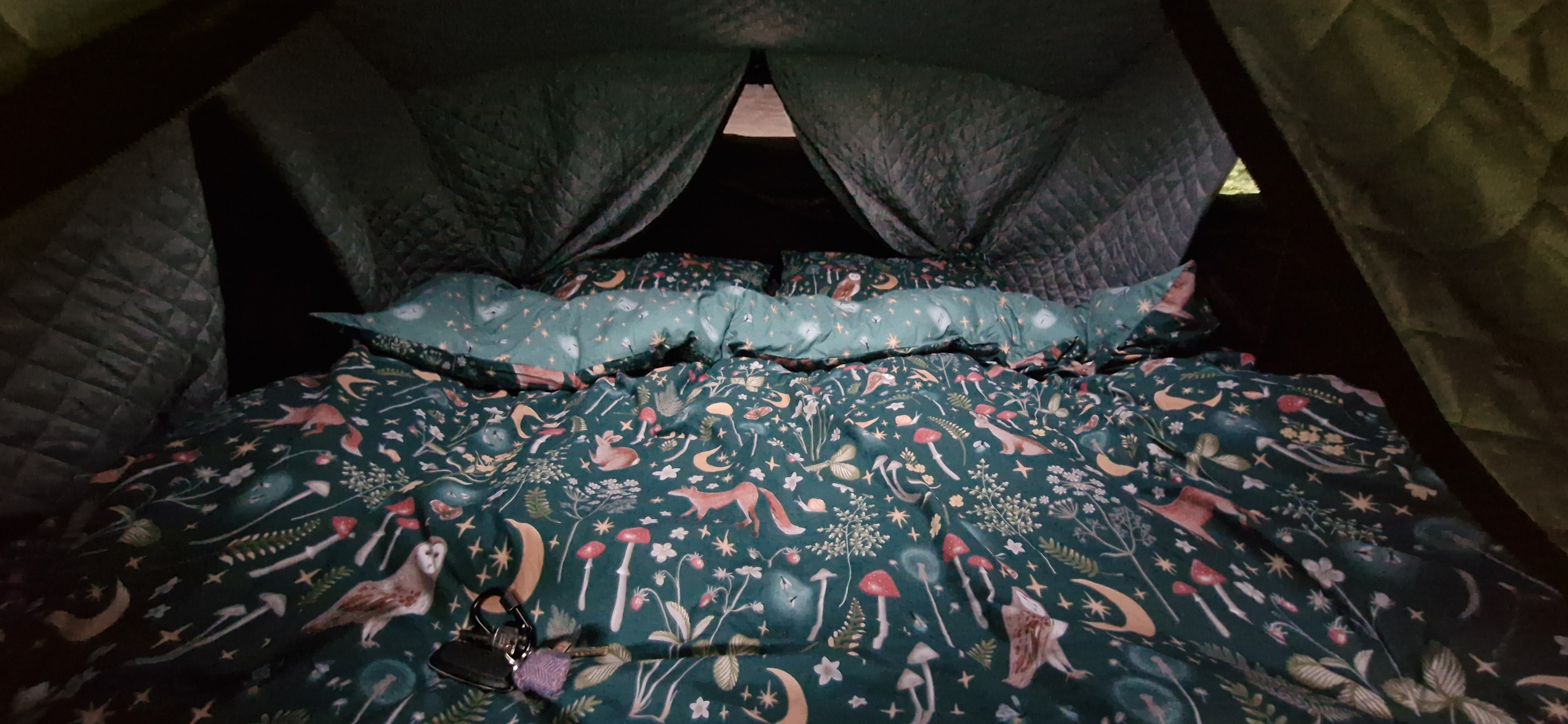
I've bought a 13.5 tog duvet for the colder months, along with a Woodlands-themed forest green duvet set.
The duvet is obviously about keeping me warm, while the bedding is more about making the TentBox feel like my own little bedroom.
There is something quite nice about having proper bedding in a roof tent, especially when you open the doors in the morning and find yourself surrounded by Scottish mountains, forests or lochs.
If I'm going to wake up somewhere beautiful on a freezing winter morning, I want to be able to look around and think, this is actually really cosy.
Preparing for the Scottish rain
It's impossible to plan a Scottish winter camping trip without thinking about rain.
And I don't just mean the rain that falls while you're sitting inside the TentBox.
I'm thinking about those moments when you're halfway through getting ready and realise you've left something in the car.
Or when you need to walk to the campsite toilets.
Or when you're standing outside trying to sort something out while it's absolutely hammering down.
That's why one of my slightly random purchases is an umbrella with a hook on the handle.
The plan is to hang it underneath the TentBox when I'm not using it, then it is always within reach to give me a little bit of shelter while I'm getting things in and out of the car.
I'm expecting that umbrella to get a lot of use between October and March.
And then there's my Oodie...
I've had my Sully Oodie from Monsters, Inc. for years.
I originally bought it when my youngest was obsessed with Monsters, Inc., and somehow it has survived and become one of my favourite things to wear when I'm cold.
So obviously, it's coming camping.
I do get a few glances when I'm walking around campsites wearing it, but honestly, I'm perfectly happy to look ridiculous if I'm warm.
There are definitely worse things than being the person walking around a campsite dressed as Sully while everyone else is wrapped in jackets.
My Amazon basket is getting rather crowded...
I've already bought quite a few things for this winter, but my Amazon basket is starting to become rather crowded.
There are still quite a few things I want to try before the really cold weather arrives.
My next order is currently looking something like this:
- Heated blanket
- Thermal long-sleeve tops
- Fleece-lined leggings
- Thermal socks
- Fleece jumpers
- Thermal hat
- Thermal gloves
- Neck gaiter
Basically, I'm slowly assembling an entire winter wardrobe that will probably spend half its life living in my car.
I'm trying to think about clothing in terms of layers rather than simply buying one enormous winter coat.
That way I can add or remove layers depending on what the Scottish weather decides to throw at me.
Trying electric hook-up with my TentBox
One thing I'm particularly interested in trying this winter is using electric hook-up with my TentBox.
I've used electric hook-up when camping before, but normally I've had it running to my freestanding pod rather than the TentBox.
This winter I want to try having the electric supply going to the TentBox itself when I'm staying somewhere that allows it.
That's where the heated blanket comes in.
I'm really interested to see how much difference having a heated blanket will make on a cold winter night. I'm looking to get the Silentnight Comfort Control Heated Throw Blanket in Green
There will definitely be a bit of trial and error involved. I'll need to work out the most practical way of managing the cable and where everything needs to go when I'm actually using the TentBox.
I'm also curious to see whether I end up using electric hook-up regularly or whether I prefer keeping my setup completely simple and self-contained.
That's one of the things I like about this whole winter project: I'm going to actually find out rather than trying to decide in advance what will work.
Layers are going to be my best friend
I'm also building up a proper collection of thermal layers for the winter.
My next clothing purchases include thermal socks, fleece jumpers, a thermal hat, thermal gloves and a neck gaiter.
I've also got fleece-lined leggings and thermal long-sleeve tops on the list.
I'm expecting these to be particularly useful first thing in the morning, when getting out of a warm duvet into a cold TentBox is probably going to be one of the hardest parts of the day.
I'm also hoping that having several layers means I can adapt depending on what I'm doing.
A cold morning sitting inside the TentBox will need something different from walking around Glencoe in the middle of the day, and something different again from standing outside cooking dinner in the rain.
I'll be testing everything properly over the winter rather than assuming that something is essential just because it sounds good on the product description.
Why am I planning more than 30 nights?
Thirty nights sounds like a lot when I actually say it out loud.
But that's exactly why I've chosen it.
I don't want to go on one winter camping trip, decide it was freezing and then assume I know what winter camping is like.
I want to actually experience it.
I want to know what it's like to wake up on a dark, cold January morning.
I want to find out how much condensation I get.
I want to test different bedding.
I want to discover which clothes I actually wear and which ones end up permanently living in the car.
I want to camp in the rain.
I want to camp when it's cold.
I want to hopefully wake up to snow.
I want to discover some of Scotland's quieter winter landscapes.
And I want to find out whether I still love camping when the novelty of summer camping has completely disappeared.
By the time March arrives, I should have a pretty good idea of what winter camping in my TentBox is actually like.
This is going to be a learning experience
I'm definitely not approaching this as someone who already has winter camping completely figured out.
Quite the opposite.
I've camped many times in a regular tent, but my TentBox winter experience is only just beginning.
My September trip to Red Squirrel Campsite was the start of it.
Now I'm about to find out what happens when I combine a TentBox with Scottish autumn and winter weather for more than 30 nights.
I'll be sharing the good, the bad, the freezing and probably the soaking wet throughout the season.
I'll also be keeping track of the equipment that genuinely makes a difference.
Because there's a huge difference between something being marketed as a winter camping essential and something that you actually find yourself reaching for every single night.
By spring, I'm hoping I'll have a much better idea of what I really needed, what I didn't need at all, and what has earned a permanent place in my camping kit.
What should I add to my winter camping kit?
This is where I need your help.
If you've spent winters camping in Scotland, I'd love to hear from you.
What is your one winter camping item that you wouldn't leave home without?
Is there something obvious that I've completely forgotten?
Is there a piece of equipment that made a massive difference to your comfort?
And if you know of any Scottish campsites that stay open throughout the winter, especially ones that welcome tents, campervans or roof tents, please send them my way.
I'm building a list of places to visit between October and March and would love to discover some new ones.
I'll keep updating my research as I discover more campsites, so hopefully this list will grow throughout the winter too.
Maybe by spring I'll have a pretty impressive map of Scottish winter camping spots.
If you've got a suggestion, leave it in the comments on my Social Media Platforms or get in touch through Wildly Wandering.
Bring on winter camping.
Affiliate disclosure: Some links in this article are affiliate links. If you purchase something through one of these links, I may receive a small commission at no additional cost to you. I only share products that are part of my own camping setup or that I'm considering for my adventures.