The first time words like autism and eye contact entered my family, my youngest son was just six months old.
I remember not really knowing what any of it meant.
How could it be autism?
There was no history of autism in my family. Surely they were wrong.
For quite a while, I convinced myself that they had to be.
But underneath that denial were questions I couldn't answer.
What does this mean?
What will his life look like?
How independent will he be when he's older?
How will I cope?
What will my life look like?
Six years later, I still don't know the answers.
And perhaps that's one of the hardest things about having a child with additional needs. There isn't a roadmap telling you exactly what the future will look like.
For years, I lived day by day, always expecting things to become easier.
When he's a little older.
When he understands a little more.
When he can communicate.
When he's safer.
I thought there would eventually be a point where the things that were so difficult would become manageable.
And some things have changed.
My son has matured. I've seen little improvements gradually appear over the years. Things that once seemed impossible have become possible. There are moments now where I can see just how much he has grown.
But some things haven't changed.
He's non-verbal. He's a flight risk. He has very limited danger awareness.
I can't turn my head for a second without knowing exactly where he is.
Sometimes I still feel like I have a two-year-old.
And because keeping him safe has always been my priority, I've realised that sometimes I've been protecting him by avoiding things rather than finding ways to make them possible.
That has meant my family has missed out on adventures.
And that's something I've been thinking about a lot lately.
Camping differently
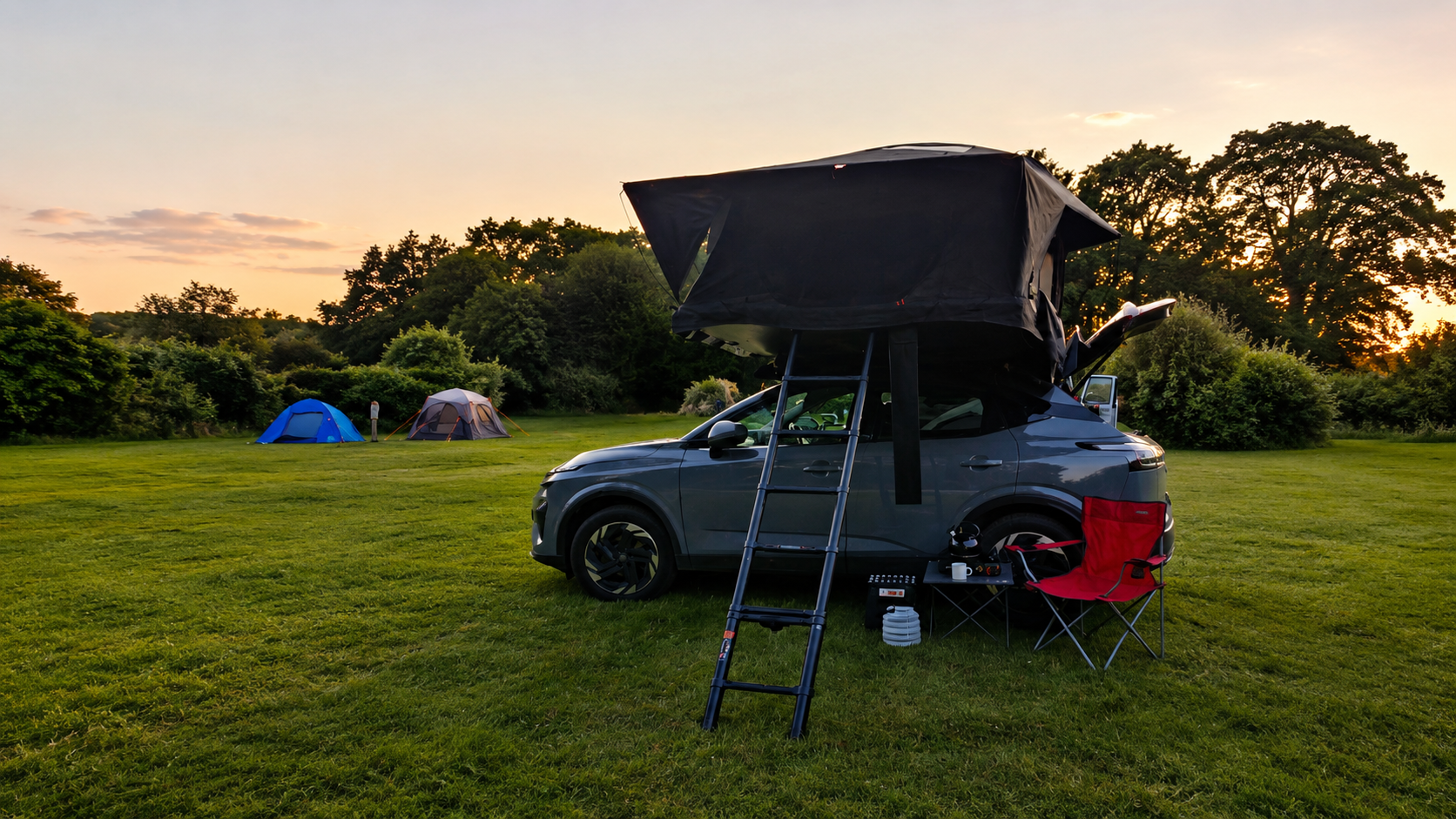
Camping with my boys has made me realise just how different our experiences can be.
When we are on a campsite, my older son can get out of the tent and go and play in the park.
He can make friends.
He can wander around.
He can have that freedom that children should have when they're camping.
And I've watched him do that while knowing that his brother simply can't have the same freedom.
Over the last few months, there have been times when I've felt incredibly guilty about that.
My oldest has been playing in the park for ages, and eventually I find myself thinking:
Okay. He's had his time. Now I need to take his brother somewhere too.
So I'll take him to the park if it's quiet enough.
Or we'll go to the beach.
Or we'll go for a walk.
Because inclusion matters.
But inclusion doesn't always look like simply opening the tent door and saying, "Off you go."
For us, it can mean much more planning.
It means constantly knowing where he is.
It means cooking while keeping an eye on him.
Packing while keeping an eye on him.
Organising equipment while keeping an eye on him.
Putting everything away while keeping an eye on him.
And sometimes, when you're finally finished and all you want to do is sit down in your camping chair with a cup of tea and watch the world go by, you realise that you don't actually get to do that.
Because he's still waiting for his adventure.
And that's okay.
It's also exhausting.
Both things can be true.
The reins I didn't want to use
For years, I didn't want to use reins.
Not because I didn't think they could be useful.
Because I worried about what other people would think.
I worried about people looking at us.
I worried about what they would assume.
And, if I'm being completely honest, I was also afraid that people would think I was lazy.
That they would look at me using reins and think I couldn't be bothered to hold my son's hand.
That somehow using them meant I wasn't doing enough as a parent.
I worried that people would judge me without knowing anything about our situation.
So for a long time, I avoided them.
But eventually, I started looking at them differently.
I realised that the reins aren't about restricting my son.
For us, they're a tool.
A tool that allows me to give him a little more independence.
A little more freedom to explore.
A little more space to move around without having to hold my hand every second.
And, honestly, they're also a tool that saves my back.
I don't have to spend the entire time bent over or holding his hand while trying to keep up with him.
I can have my hands free.
He can explore.
I can keep him safe.
And I no longer care what anyone thinks about it.
Because my son's safety is more important to me than somebody else's opinion.
I'd rather someone look at us and wonder why he's wearing reins than have me look away for one second and have him disappear.
I'd rather someone think I'm lazy than put my son's safety at risk just to avoid being judged.
The people looking at us don't know our story.
They don't know that he's non-verbal.
They don't know that he's a flight risk.
They don't know how quickly he can disappear.
They don't know how little danger awareness he has.
And they don't need to.
I know.
And that's enough.
Finding more freedom
I've also started thinking differently about how we involve him in camping.
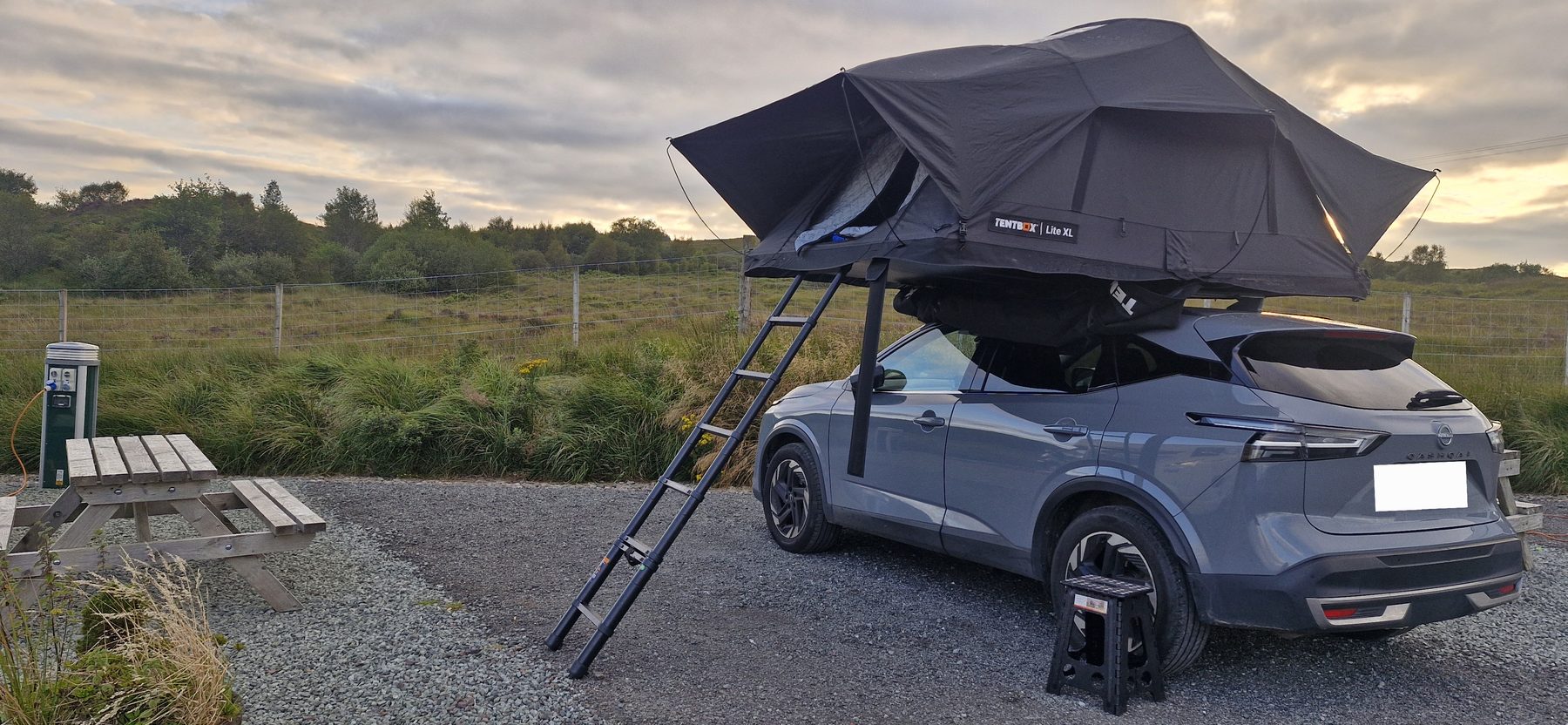
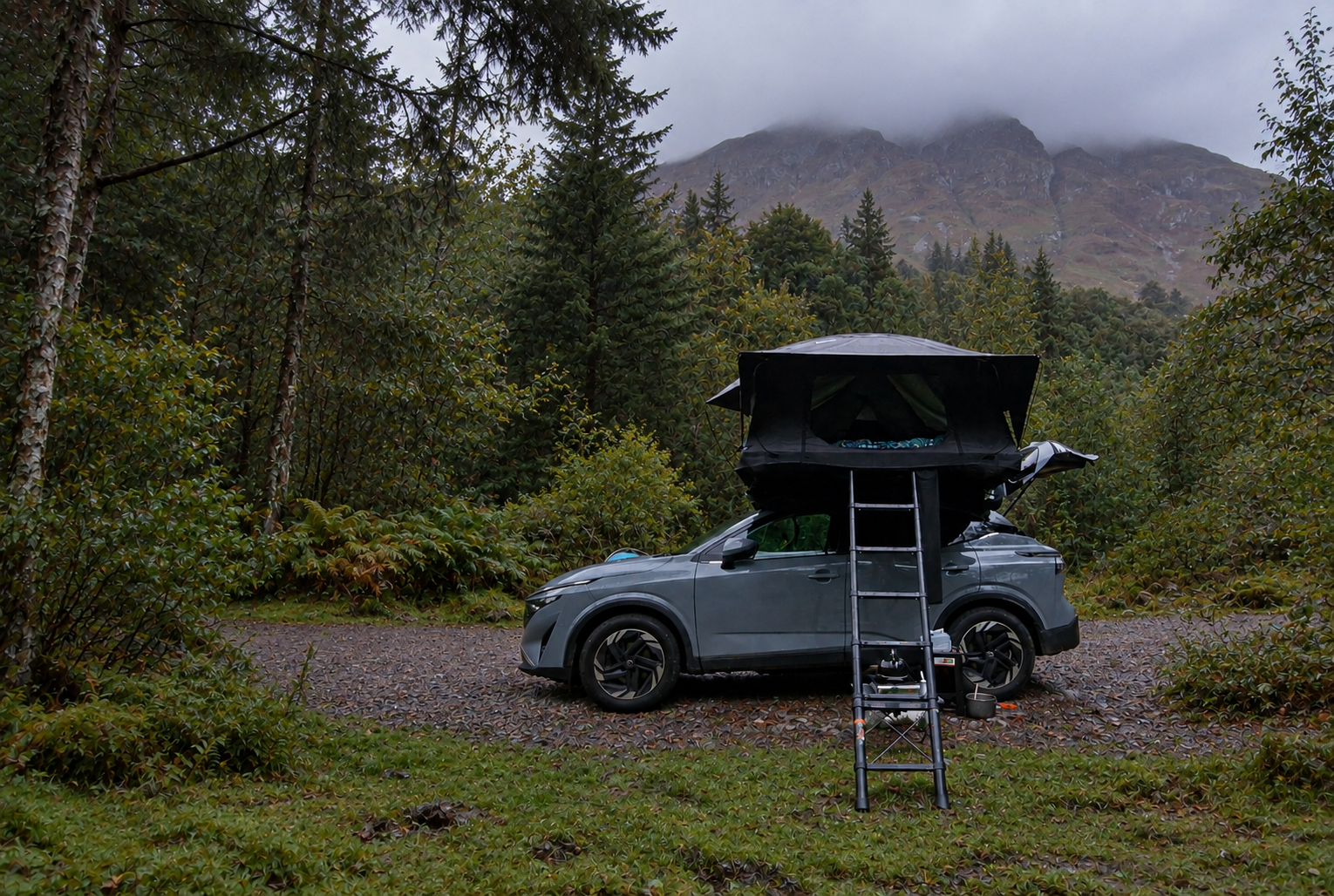
When I'm packing up the TentBox, there are times when I simply cannot safely leave him unsecured.
In those moments, sometimes the only option is securing him in his car seat while I get everything packed away.
But lately, I've been trying to keep him involved and give him as much freedom as I safely can.
I want him to be part of it.
I want him to experience the campsite rather than simply be contained while I do everything around him.
Because he loves it.
He absolutely loves adventures.
And his happiness when he's outside reminds me why I'm trying so hard to find ways to make this work.
His favourite thing might actually be one of my favourite things to watch.
He climbs up the ladder into the TentBox with all of his many, many toys and gets himself cosy inside.
He has his own little world up there.
And seeing him happy makes all the planning, worrying, packing and exhaustion worth it.
Maybe I'm done waiting
For six years, I think I've been waiting for things to get easier.
But I'm starting to realise that maybe I don't need to wait.
Maybe things don't have to become easier before we start doing more.
Maybe we just need to do things differently.
There will still be difficult moments.
There will still be times when I can't relax because I need to know exactly where he is.
There will still be campsites where the park is too busy, beaches where I need to stay close, and moments where safety has to come before everything else.
But there will also be adventures.
There will be beaches.
Forests.
Mountains.
Campsites.
New places.
And, hopefully, new countries.
Because my son loves exploring.
He loves being outside.
He loves being with me.
And I want him to experience as much of this world as he possibly can.
I don't know what his future looks like.
I don't know how independent he'll be when he's older.
I don't know whether the things I worry about today will still matter in another six years.
I don't know what our family life will look like.
But I do know this.
I'm not going to spend the next six years waiting for life to become easier before we start living it.
I'm going to find ways to make adventures possible.
Not necessarily the same way other families do them.
Not always easily.
Not always perfectly.
But together.
And perhaps that's what Wildly Wandering is really about for us.
Not having the freedom to simply wander wherever we want.
But finding our own way to wander anyway.